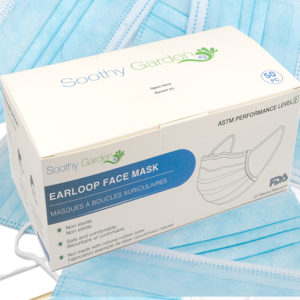
Medical masks are originally intended to be used by medical practitioners when treating patients to prevent bacteria from droplets from the doctor’s or nurse’s mouth or nose to the patient. However, with the spread of COVID-19 all around the world, the general population, whether ill or not, are advised or even mandated in certain countries, to wear masks to protect themselves and others from the deadly epidemic.
Cloth face Mask vs. Medical Mask
Most people wear general masks made of cloth to cover their mouth and nose when going out during this epidemic, but is it that effective in blocking the virus from entering your system?
Verifiable research about the spread of the virus is still lacking since the spread of this epidemic. Some research points out that the virus is contained in droplets and can be spread when sneezing or coughing from those who have the symptoms, or through talking or even just breathing from asymptomatic carriers. Other researches have pointed out the possibility that the virus can linger suspended in the air for a few hours before it settles on the ground.
Whichever the case is, wearing general cloth masks may not provide you the needed protection against Coronavirus because it offers low protection barrier, no filtration properties and low fluid resistance as droplets can easily pass through it along with the viruses and bacteria. Furthermore, cloth masks don’t always fit properly, allowing tiny airborne particles to enter and exit the mask through the gaps.
Why Choose Our Medical Masks?
To ensure you have higher protection against COVID-19, use high-quality medical masks that offer:
Effective Filtration
Choose medical masks with high bacterial and viral filtration efficiency, preferably with more than 98% efficiency. This ensures dust, bacteria, virus, dust, smoke, pollen are do not enter your system.
Easy Breathing
High-quality medical masks do not make breathing difficult. Choose masks that offer three layers of protection but are still breathable and soft to prevent irritation when worn for hours.
Fluid Resistance
Masks that are fluid resistant prevent droplets and aerosols from penetrating the mask’s layers, thus, keeping you protected from diseases or prevents you from spreading harmful particles to others.
Adjustable Fit
Making sure your mask fits around your mouth and nose with no gaps ensures that you do not accidentally breathe in airborne particles. High-quality masks have adjustable nose bars and elastic ear loops that ensure a comfortable fit.
If you’re looking for high-quality medical masks to protect against bacteria and viruses, our ASTM Level 2 Face Mask and Disposable Face Mask are medical-grade and high-quality masks that offer all the benefits mentioned above.
As the COVID-19/Coronavirus pandemic continues to spread throughout the world, a confusing topic continues to be the wearing of face masks. At the start of the pandemic, Dr. Theresa Tam, Canada’s chief public health officer, recommended that people who were not sick should not be wearing a mask. Now, however, Tam and Canada’s public health officials recommend non-medical face masks be worn in public when social distancing isn’t possible, and Prime Minister Justin Trudeau has said he will do just that. What’s changed? Is a mask really necessary?
Face Masks Protect Others From Coronavirus
A May 22 paper in the Annals of Internal Medicine took a close look at the effectiveness of masks in preventing the spread of disease. The results offer evidence that face masks can stop respiratory droplets from spreading. If someone wearing a face mask sneezes, the people around them are far better protected from potentially virus-bearing droplets than if there was no mask in place. “Every virus-laden particle retained in a mask is not available to hang in the air as an aerosol or fall to a surface to be later picked up by touch,” said researchers in the paper.
Do Face Masks Protect You from COVID-19?
Perhaps the most important thing to understand is how coronavirus, the virus that causes COVID-19, is passed from person to person. COVID-19 spreads primarily between people who are within about 6 feet (2 meters) of one another. It happens when one person produces respiratory droplets through a cough, sneeze, or talking, and another person inhales them. According to the U.S. Centers for Disease Control and Prevention (CDC), the virus spreads very easily between people, much more so than influenza.
The best way to prevent the spread of COVID-19 is to disinfect surfaces, practice frequent and thorough handwashing, and maintain social distance so those respiratory droplets can’t land on another person. But when social distancing isn’t possible, a face mask is the next best thing.
Cloth face masks are not designed to prevent the virus from permeating through to the wearer, and this may be why they have been the subject of so much controversy. Medical-grade face masks designed to filter particles in the air and protect the wearer are critical supplies that remain reserved for healthcare workers and first responders. Cloth face masks do prevent the spread of the disease, however, so in the long run, yes – they protect everyone.
In the briefing in which she recommended wearing masks, Dr. Tam noted people should see masks “as a way to protect other people – when two people are both wearing masks, they are protecting the other.” As children, we are taught to cover our mouths when we sneeze or cough – it prevents the spread of germs, and it’s the polite thing to do. Wearing a mask is simply the more advanced version of this – when the germs involved are much more dangerous and potentially deadly.
As we learn more about the coronavirus and head into summer, it becomes more evident that wearing a mask as an extra layer of protection is a wise move, as well as one that demonstrates a concern for fellow citizens. Handwashing remains essential and social distancing remains ideal, but as people grow tired of isolation and need to get out, face masks are important to protect ourselves and others from the spread of COVID-19.


 Price range: 87.95$ through 146.59$Select options This product has multiple variants. The options may be chosen on the product page